
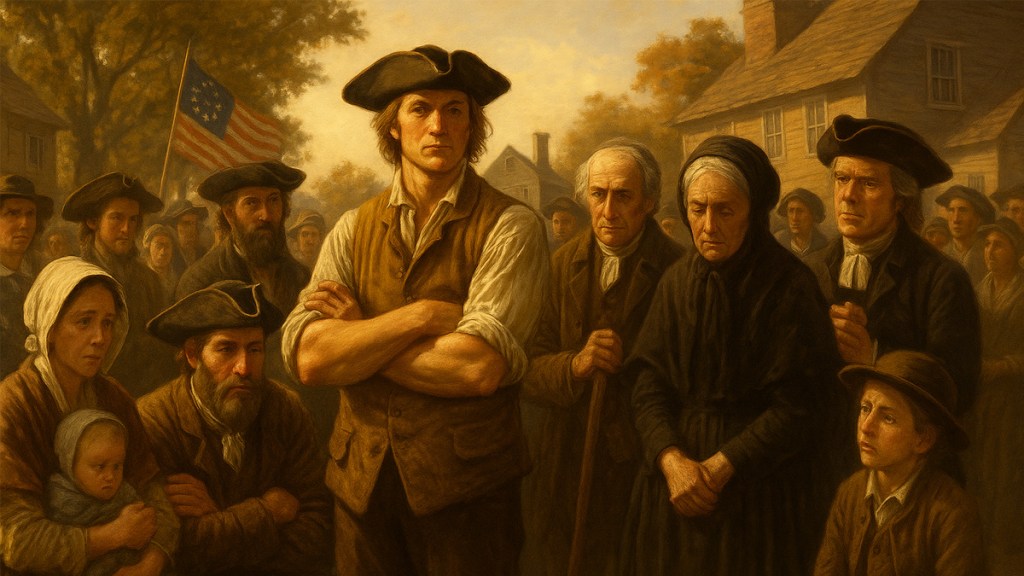
Tonight, the streets of Norwich are quieter than they’ve been in months. The harvest is mostly in, the leaves are turning, and the talk has turned once again to war. Every man, woman, and child in town feels it now. The war that once seemed like Boston’s problem or Philadelphia’s project has arrived in the heart. You can hear it in the silence of the forge, in the empty chair at the tavern, and in the way neighbors look at one another when the latest post rider arrives.
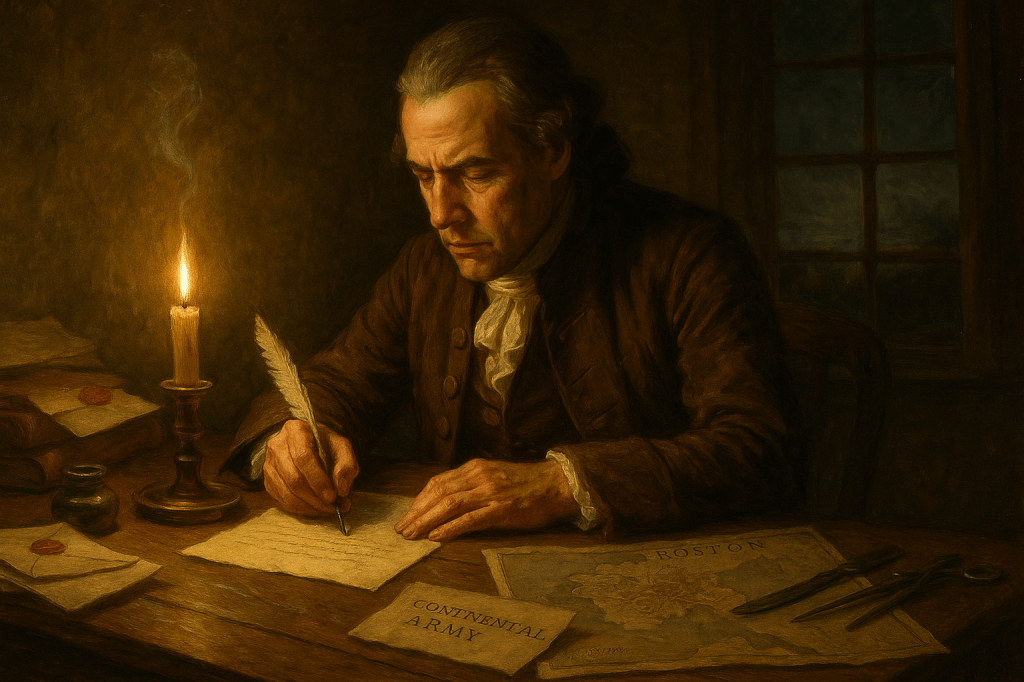
The news out of Boston is plain enough. General Thomas Gage is gone, packed off to England with his pride and a record of failure long enough to fill a ship’s log. In his place stands General William Howe, the kind of man who will not repeat Gage’s mistakes. The redcoats are still bottled up, but their discipline grows while our army fades from fatigue and hunger. Washington holds the siege lines with a force that shrinks by the day, and yet the man does not break. He writes to Congress for supplies, for powder, for time. None of those things come easily. The army stays, bound by faith more than pay.
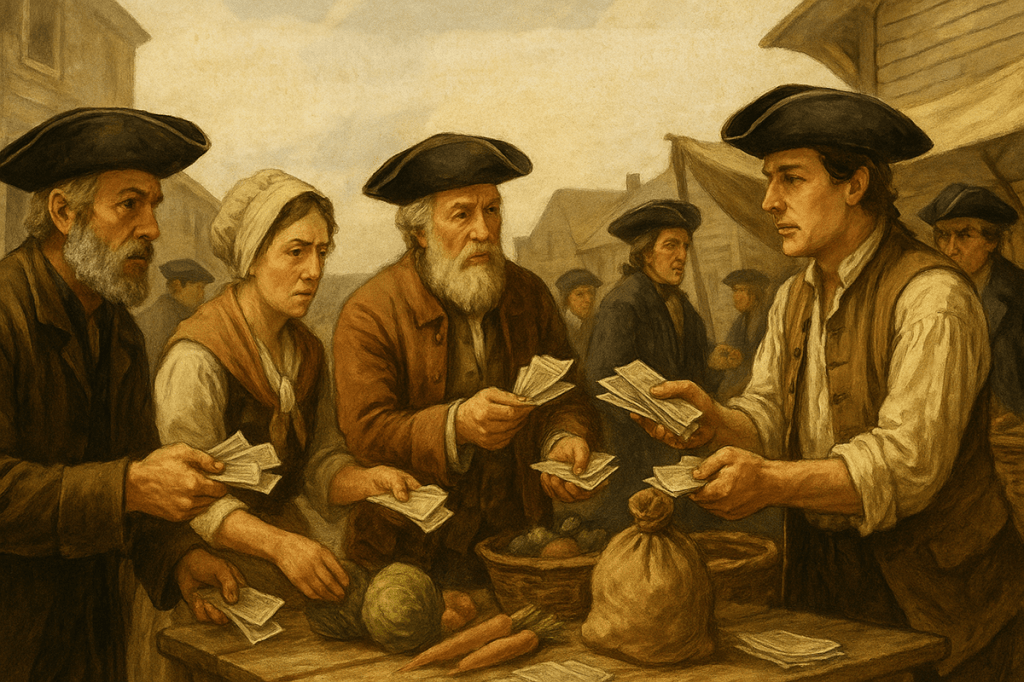
Here in Norwich, the faith is still strong, but it’s tested. Prices rise. Paper money loses its worth. The merchants frown when they take it, then glance over their shoulders as if the King’s men might walk through the door at any moment. The blacksmith grumbles about nails being dear, and the preacher warns that the devil works through greed. In Widow Parmenter’s coffeehouse, the talk is sharp and weary. A mother with two sons gone to war says she can live with less bread if it means her boys come home free. Another woman shakes her head and mutters that liberty cannot be baked or boiled.
Even the Loyalists, few though they are, grow bolder in their whispers. One of them, a certain schoolmaster who once called Congress unlawful, has been seen passing out London papers in the market square. They say he speaks of order and reason, though it sounds to most of us like surrender in finer words. He reminds me of what John Adams once wrote from Congress — that some men could spend all day debating whether two and three make five. There’s always a kind of man who would rather be right in chains than uncertain in freedom.
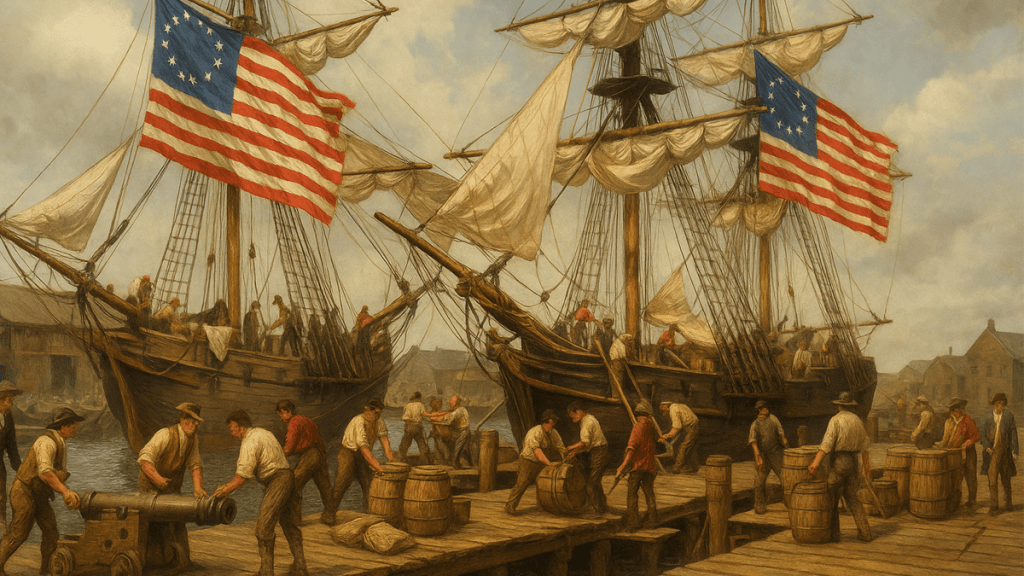
The real news tonight, though, lies beyond Boston and Norwich alike. From Philadelphia comes word that Congress has done the unthinkable: voted to create a navy. Two ships to start, maybe more if fortune smiles. The ink is still drying, but the intent is clear. The colonies are no longer begging to be heard; they are preparing to be obeyed. Adams himself has taken the lead, arguing that liberty cannot stand on land alone. And while some still call it reckless, others call it necessary. If tyranny commands the seas, then we must learn to sail.
Across the ocean, King George sharpens his pen for a speech that will declare us in open rebellion. The word “forgiveness” has vanished from his tongue. He will hire Hessian soldiers to do what his own subjects will not. His ministers talk of conquest, his newspapers of punishment. Let them. They mistake distance for weakness.
And yet, for all this talk of fleets and kings, the heart of it still beats here in towns like ours. In the hands that mend sails, the voices that fill the meetinghouse, the children who learn their letters by candlelight while their fathers march north. We do not have gold, or gunpowder, or certainty. What we have is will.
Tonight’s show is about that will — about the courage that grows when comfort is gone. It is about men who build ships with empty pockets, women who keep faith with empty cupboards, and a people who refuse to kneel no matter how loud the empire shouts.
This is Revolutionary Talk on WREV 760AM. From Norwich to Cambridge to Philadelphia, the tide is rising. The world may not yet call it independence, but that’s exactly what it is becoming.

 Powder to Parchment